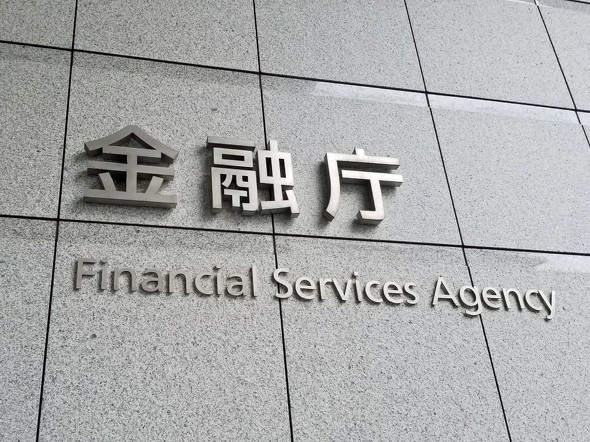
1. Background and Frontier AI Threats
On May 22, 2026, the Financial Services Agency (FSA) and the Bank of Japan (BOJ) issued an emergency directive to domestic financial institutions in response to the rapid evolution of “frontier AI” models, such as Anthropic’s “Claude Mythos.” These advanced AI models can rapidly identify and exploit software vulnerabilities at a scale and speed previously difficult even for skilled human engineers. Consequently, financial institutions must urgently overhaul their asset management, vulnerability patching, and monitoring frameworks. This initiative serves as an immediate response aligned with the government’s national strategy, “Project YATA-Shield.”
2. Key Outlines of the “9 Short-Term Emergency Measures”
- I. Positioning as a Corporate Governance Issue: Senior management must take ownership, moving cyber defense beyond the IT department to establish a cross-functional system involving risk management, finance, and business units.
- II. Identification of Priority Systems: To handle the surging patching workload, organizations must prioritize critical internet-facing assets, most notably online banking platforms.
- III. Elimination of Technical Debt: Institutions must close unused network ports, remove unnecessary privileged IDs, clear backlogged patches, and immediately upgrade End-of-Life (EoL) software.
- IV. Augmentation of Human Resources: Organizations should review deployment plans and consider pulling support from other internal IT divisions to boost patch management capacities.
- V. Review of Vendor Maintenance Contracts: Management must verify that existing Service Level Agreements (SLAs) cover emergency patch applications and ensure vendor availability during nights, weekends, and holidays.
- VI. Risk-Based Patch Prioritization: Vulnerability patching should be evaluated based on actual exploitability and real-world attack probability, rather than relying solely on standard CVSS scores.
- VII. Strengthening Compensating Controls: Defense capabilities should be boosted via cloud-based WAFs (virtual patching), network isolation, multi-factor authentication (MFA) for privileged accounts, and endpoint detection and response (EDR).
- VIII. Preparedness for Service Disruptions: Beyond preparing for forced outages from cyberattacks, organizations must formalize clear internal criteria and procedures for initiating “proactive, voluntary service shutdowns.”
- IX. Maintaining and Enhancing External Collaboration: Financial institutions are encouraged to actively engage with Financial ISAC, industry communities, and regulators to foster collective resilience.
3. Future Outlook and Continuity of Core Guidelines While these nine items serve as immediate, short-term mitigations, mid-to-long-term strategies will shift toward the automation of vulnerability management. Referencing assessments from the UK AI Safety Institute (AISI)—which notes that current frontier AI is not yet fully capable of breaching robustly secured IT environments—the regulators emphasized that executing established baseline practices outlined in the “Guidelines for Cybersecurity in the Financial Sector” remains fundamentally critical.
この記事を書いた人 Wrote this article

Chris Nakagawa
Biographical Info: -Building international financial networks, head of IT infrastructure projects including networks. -Involved in international financial infrastructure consulting, operational design for a major telecom company in Hong Kong. - Experience as a security analyst, providing integrated security system solutions. - Expertise advisory services for planning security countermeasures against advanced cyber attacks, as well as supervisory services focusing on incident response. - Advisory for CISO/CTO/CEO security guidelines / policy creation. - Supervising for SOC/CSIRT - Speaker at international conferences, author of numerous books, etc. - Certification : CISSP/GIAC/GCIA/CEH
関連記事 Related articles


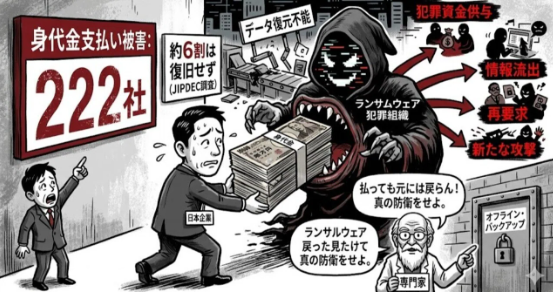
- 04/26/2026
Over 200 Japanese firms paid ransomware attackers, 60% fail to recover data
AccordingtoasurveybytheJ……


- 10/25/2024
Lack of security measures due to the agency’s financial difficulties
MayIintroducetheonehigh-p……

- 10/28/2024
Possible Leak of Confidential Information on JAXA Again over Again
November2023,itwasreported……

- 04/26/2026
JPCERT/CC Issues Multiple Critical Security Advisories for Adobe Acrobat, Citrix NetScaler, and F5 BIG-IP
Japan’sComputerEmergen……